Feature · Eva Artistic Management
From the Screen to the Stage: Jamie Reeves on Film Music, Community, and Why the Concert Hall Needs Both
How John Williams, Back to the Future, and an imaginary baton led one of America’s most purposeful conductors to the podium.
There is a conductor in Montgomery, Alabama who once stood in front of his television conducting an imaginary orchestra to the score of Back to the Future.
Today, Jamie Reeves stands in front of the real thing.
As Music Director of the Montgomery Symphony Orchestra, Reeves has built one of the most purposeful and ambitious tenures in American regional orchestral life — commissioning world premieres, collaborating with Yo-Yo Ma, and bringing the Selma to Montgomery March to the concert stage through Nkeiru Okoye’s landmark choral-orchestral work A Time for Jubilee. But ask him where it all started, and he doesn’t point to Peabody or Indiana University, or to Bernard Haitink at the Lucerne Festival.
He points to John Williams.
The Entry Point
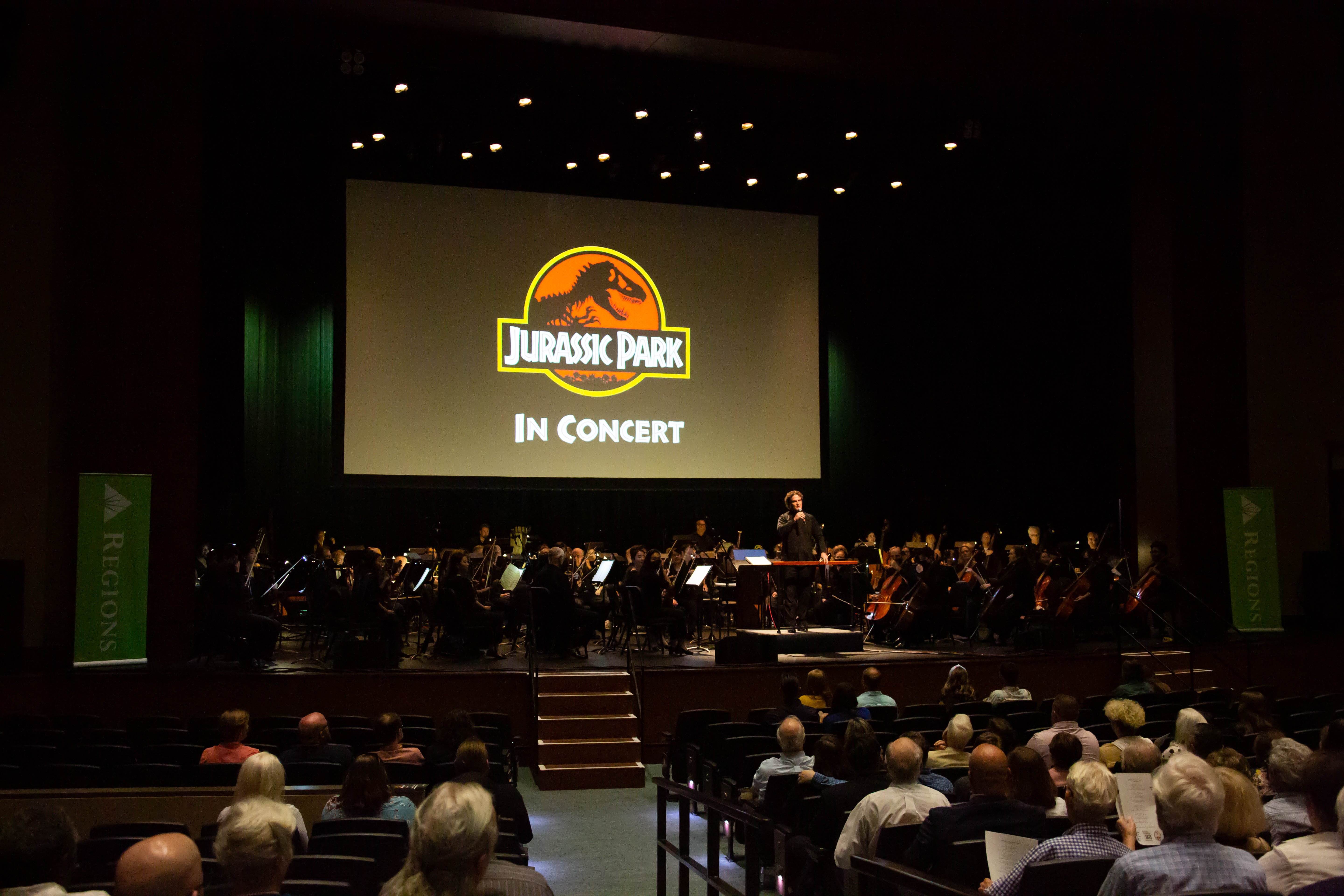
“Growing up in a very rural area, I did not have access to live performances on a regular basis,” Reeves says. “Exposure to live symphonic music really came to me as a teenager and college student. For me, growing up with films like Back to the Future, Home Alone, Jurassic Park, and Star Wars was my entry point into the world of music and conducting.”
It is a story more conductors share than admit. The great film scores of the 1980s and ’90s did something that no amount of music education programming could fully replicate: they met audiences where they were, in their living rooms, and made the symphony orchestra feel like the most natural sound in the world.
For Reeves, listening became watching. Watching became conducting — an imaginary baton, an imaginary orchestra, a very real obsession.
Building the Audience
When Reeves became Music Director of the Montgomery Symphony, one of his earliest strategic imperatives was clear: expand the audience, and expand it quickly.
Film-in-concert programming was part of the answer — not as a concession to populism, but as a deliberate bridge. “I knew that programming films, especially the iconic scores of John Williams, would inspire our community to come to the concert hall,” he says, “in the same way they inspired me to come to symphonic music as a young musician.”
“Community participation is worth exponentially more than the ticket sales. Bringing audience members to the theatre, especially those coming for the first time ever, to enjoy the thrill of a full-length film with a live orchestra playing the score, synced in real time, cultivates a burning desire to have this experience again and again.”
Film scores, he argues, resonate across generations precisely because they are already woven into the fabric of people’s lives. The music of John Williams is not background — it is memory. It is the sound of childhood wonder, of first experiences of grandeur and loss and triumph. To hear it played live, by a full orchestra, in the moment, is to understand for the first time what an orchestra actually does.
That understanding, Reeves believes, does not stay in the concert hall. It follows people home.
The Larger Vision
Film-in-concert is one thread in a much larger artistic vision. Reeves is the creator of the Alabama Composers Project — a multi-season commissioning initiative connecting new works to Alabama’s cultural and historical landscape. In 2025, he appointed Nkeiru Okoye as the inaugural William Levi Dawson Composer-in-Residence, leading to the 2026 world premiere of A Time for Jubilee, a large-scale choral-orchestral work commemorating the 60th anniversary of the Selma to Montgomery March. The project brought together the orchestra, university choirs, and leading soloists in one of the most ambitious collaborations in the orchestra’s history.
In the 2026–2027 season, Reeves opens the Montgomery Symphony’s 50th anniversary with Yo-Yo Ma performing the Dvořák Cello Concerto — a collaboration that reflects both his artistic reach and his ability to bring internationally recognized artists into genuine dialogue with regional audiences.
His guest conducting engagements include the Chattanooga Symphony, Louisiana Philharmonic, New Mexico Philharmonic, and Omaha Symphony. He has served as cover conductor with both the New York Philharmonic and the Los Angeles Philharmonic at the Hollywood Bowl. His collaborative partners have included Santiago Cañón-Valencia, Laquita Mitchell, Natasha Paremski, Geneva Lewis, Jeffrey Biegel, and Evren Ozel.
Reeves holds conducting degrees from the Indiana University Jacobs School of Music and the Peabody Conservatory of Johns Hopkins University, where he studied with Marin Alsop, David Effron, Arthur Fagen, John Ratledge, and Joseph Young. His conducting development includes masterclasses at the Lucerne Festival with Bernard Haitink and at the Cabrillo Festival with Cristián Măcelaru. He has been recognized as a finalist in both the Grzegorz Fitelberg and Besançon International Conducting Competitions.
What connects John Williams to Nkeiru Okoye, film night to world premieres, rural childhood to the Hollywood Bowl?
A belief that the orchestra belongs to everyone — and that the conductor’s job is to prove it, one audience at a time.
The boy conducting in front of the television never stopped. He just found a bigger stage.
Jamie Reeves is represented by Eva Artistic Management. · View artist profile · Booking & press inquiries
“Visibility isn’t vanity — it’s legacy.” · press.evaartisticmanagement.com